A galvanized process roots blower is the single most critical piece of equipment determining zinc coating quality on a continuous galvanizing line (CGL). As a type of roots rotary lobe blower—also known as a positive displacement blower (PD blower)—it delivers a fixed volume of air per revolution regardless of discharge pressure, making it uniquely suited to the air knife wiping, degreasing tank agitation, annealing furnace atmosphere control, and corrosive fume extraction stages that define modern hot-dip galvanizing .
As a type of positive displacement blower, the roots rotary lobe blower has become the default choice for steel mills and galvanizing plants worldwide. With the global Roots blower market expanding at a 5.36% CAGR and crossing USD 2.81 billion in 2026, understanding its application in galvanizing is critical for plant engineers, procurement managers, and process designers alike.
What Is a Roots Rotary Lobe Blower?
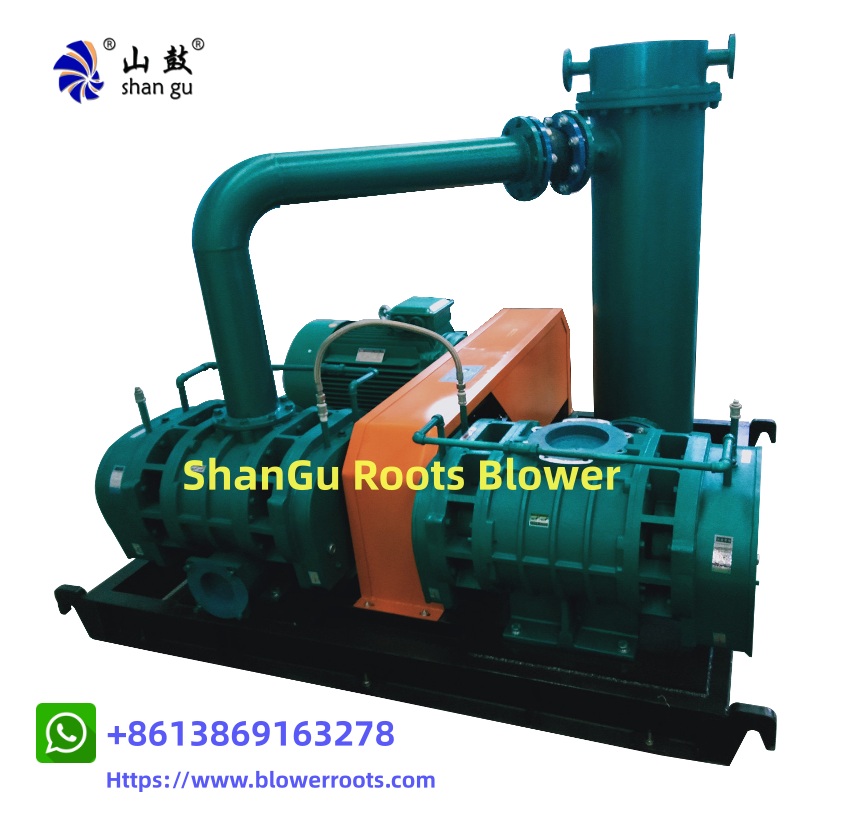
A roots rotary lobe blower—often called a positive displacement blower (PD blower)—operates on a simple yet robust principle: two intermeshing lobe rotors (bi-lobe or tri-lobe) rotate in opposite directions inside a casing, trapping a fixed volume of air at the inlet and forcing it to the outlet with each revolution.
Key technical characteristics:
Constant volumetric flow: The displaced volume is essentially the same within the blower regardless of pressure, temperature or barometric pressure.
No internal compression: Pressure is generated solely by system back-pressure, making the device inherently resistant to load swings.
Oil-free delivery: Timing gears maintain precise rotor clearance, eliminating the need for lubrication inside the lobe cavity.
Tri-lobe & twisted tri-lobe designs: Reduce pulsation and noise, extending bearing life.
💡 Because a positive displacement blower delivers the same volume of air per rotation irrespective of discharge pressure, it is uniquely suited to galvanizing applications where system resistance changes continuously.
Where Galvanized Process Roots Blowers Work:
Continuous hot-dip galvanizing lines involve multiple stages where galvanized process roots blower plays a decisive role:

1. Air Knife Zinc-Layer Control (Critical Application)
After the steel strip exits the molten zinc bath, excess zinc must be wiped off to achieve a uniform coating thickness. Twin air knives positioned on both sides of the strip emit high-velocity, flat air jets—typically at 49–78.4 kPa (0.5–0.8 bar)—to shear off surplus zinc.
A roots rotary lobe blower is the preferred air source here because:
Zero pulsation output (tri-lobe design) prevents periodic stripe defects on the coating
Constant flow under variable back-pressure maintains consistent wiping force even as the knife gap or strip speed changes
Flow rates of 20–100+ m³/min per knife match typical CGL (Continuous Galvanizing Line) requirements
2. Degreasing & Pre-treatment Tank Agitation
Before annealing, the strip passes through alkaline degreasing tanks. Positive displacement blowers deliver air through bottom-mounted diffusers to:
Homogenize bath concentration
Accelerate emulsification of oils and greases
Prevent stagnant zones that cause uneven cleaning
Typical spec: 9.8–29.4 kPa, 2–8 m³/min per tank.
3. Annealing Furnace Atmosphere Control
In the NOF (Non-Oxidizing Furnace) and reduction furnace sections, Roots blowers serve dual purposes:
Exhaust extraction — pulling combustion products to maintain furnace pressure
Protective gas circulation — boosting N₂ + H₂ atmosphere back into the furnace loop
The constant-flow characteristic of PD blowers ensures that furnace pressure stays within the narrow ±5 to ±15 Pa window required for defect-free annealing.
4. Fume Extraction & Environmental Compliance
Acid pickling and chromate passivation stations generate corrosive fumes (HCl, H₂SO₄ mist, CrO₃). A galvanized process roots blower configured in 316L stainless steel with PTFE-coated rotors acts as the extraction fan, feeding an alkali scrubber tower. With environmental compliance driving over 40% of new Roots blower installations, corrosion-resistant PD blowers are no longer optional—they are mandatory.
Why Roots Rotary Lobe Blowers Outperform Alternatives in Galvanizing
| Requirement in Galvanizing | Centrifugal Blower | galvanized process roots blower |
|---|---|---|
| Constant flow under fluctuating back-pressure | ✗ Flow drops with pressure rise | ✓ Flow remains constant |
| Oil-free delivery | ✓ | ✓ |
| Mid-pressure range (0.5–1.5bar) | △ Low efficiency | ✓ Optimal efficiency |
| Continuous 24/7 operation | △ Higher maintenance | ✓ MTBF > 20,000 hrs |
| Compact footprint for retrofit | ✗ Large | ✓ Compact |
Market Trends Shaping Galvanized Process Roots Blower Selection
The Roots blower industry is undergoing a technology upgrade cycle. According to 2024–2025 manufacturer surveys:
28% of new models emphasize energy efficiency — important because blower electricity can represent up to 25% of operational costs in industrial aeration
30% focus on noise reduction — modern tri-lobe and helical screw designs cut noise by up to 8 dB
22% integrate digital monitoring (IoT) — vibration, temperature, and flow sensors enable predictive maintenance
Variable Frequency Drive (VFD) compatibility is now standard among premium suppliers
For galvanizing plants, these trends translate into:
20% power savings with twisted tri-lobe rotors vs. traditional straight-lobe designs
Longer bearing life thanks to smoother pulse patterns
Remote condition monitoring to prevent unplanned line stoppages
Selecting the Right Galvanized Process Roots Blower
When specifying a positive displacement blower for a galvanizing line, consider:
Air volume (m³/min) — based on air knife count and strip width
Working pressure (kPa) — typically 49–150kPa for air knife service
Medium corrosiveness — 304/316L stainless for acid/pickling zones; cast iron acceptable for clean air knife service
Cooling method — water-cooled for ≥ 49 kPa continuous duty
Drive type — VFD-compatible motor for energy savings and soft start
Certifications — ISO 9001, CE, ATEX (if explosive atmospheres are present)
Maintenance Best Practices for Galvanizing Environments
Galvanizing plants are harsh—high humidity, corrosive fumes, and continuous duty. To maximize blower life:
Every 300 hours: Check oil level (ISO VG 220 anti-emration gear oil recommended for humid environments)
Every 1,000 hours: Clean inlet air filter — zinc dust and alkaline mist accelerate clogging
Every 2,000 hours: Inspect rotor tip clearance; corrosion can increase clearance by 5–10%, reducing volumetric efficiency
Annual: Gearbox inspection, mechanical seal replacement, rotor dynamic balancing
⚠️ Never start a galvanized process roots blower against a closed discharge valve. Always verify the outlet is open and the air knife path is clear to avoid over-pressure damage to timing gears.
Frequently Asked Questions
Q1: Can a roots rotary lobe blower handle the high temperatures near a zinc bath?
Yes. With water-cooled jackets and high-temperature grease, Roots blowers operate reliably in ambient temperatures up to 200°C near the galvanizing pot.
Q2: What pressure is needed for air knife service?
Most continuous galvanizing lines require 49–150 kPa (0.5–1.5 bar) at the air knife, with flow rates ranging from 20 to 100+ m³/min depending on strip width.
Q3: How does a positive displacement blower differ from a centrifugal fan in galvanizing?
A PD blower delivers constant volumetric flow regardless of system pressure changes, whereas a centrifugal fan’s flow drops as pressure rises. This makes PD blowers ideal for air knife applications where back-pressure fluctuates with strip speed and knife gap.
Q4: Are stainless steel roots blowers necessary for pickling line fume extraction?
For HCl or H₂SO₄ pickling fumes, 316L stainless steel with PTFE-coated rotors is strongly recommended to resist corrosion and extend service life beyond 5 years.
Q5: What efficiency gains can I expect from a modern tri-lobe design?
Twisted tri-lobe rotors reduce power consumption by up to 20% compared to traditional straight-lobe blowers under identical pressure and flow conditions.
Conclusion: Your Next Step Toward a Reliable Galvanizing Line
The evidence is clear—galvanized process roots blowers are not just components; they are the backbone of coating quality, environmental compliance, and operational uptime in modern galvanizing plants. As a proven positive displacement blower technology, the roots rotary lobe blower delivers the constant, pulsation-free airflow that air knives, degreasing tanks, and fume extraction systems demand.
With the market shifting toward energy-efficient, low-noise, and IoT-enabled PD blowers, now is the time to evaluate your galvanizing line’s air supply strategy.
📞 Request a Custom Quote
Our engineering team provides customized design services within 2 hours based on your flow, pressure, and corrosion-resistance requirements. Whether you need a single air-knife blower or a complete multi-blower package for a new CGL line, we deliver CE/ISO-certified roots rotary lobe blowers with worldwide shipping.
📧 Email: [vincent@cnrootsblower.com] 📱 Tel/WhatsApp: [+86-13869163278]
Get your galvanized process roots blower specification today