Séidire Fréamhacha Gásúcháin Silo Fuinseoige: An Eochair do Scaoilte Fuinseoige Clog-saor in aisce
Gineann stáisiúin chumhachta gual-bhreoslaithe méideanna ollmhóra luaithrigh chuile lá. An slabhra tipiciúil - hopper deascán leictreastatach → sé séidire fréamhacha→ iompar aeroibrithe → stóráil silo fuinseoige → luchtú mórchóire - ní bhriseann sé síos de ghnáth ag an gcéim iompair, ach ag an an nóiméad deireanach de urscaoileadh silo. Faoi dhlúthú imtharraingteach fadtéarmach, cruaíonn fuinseog eitilt, “droichid,” agus áirsí. Coinníonn an comhla urscaoilte sníomh, ach ní thagann aon luaithreach amach.
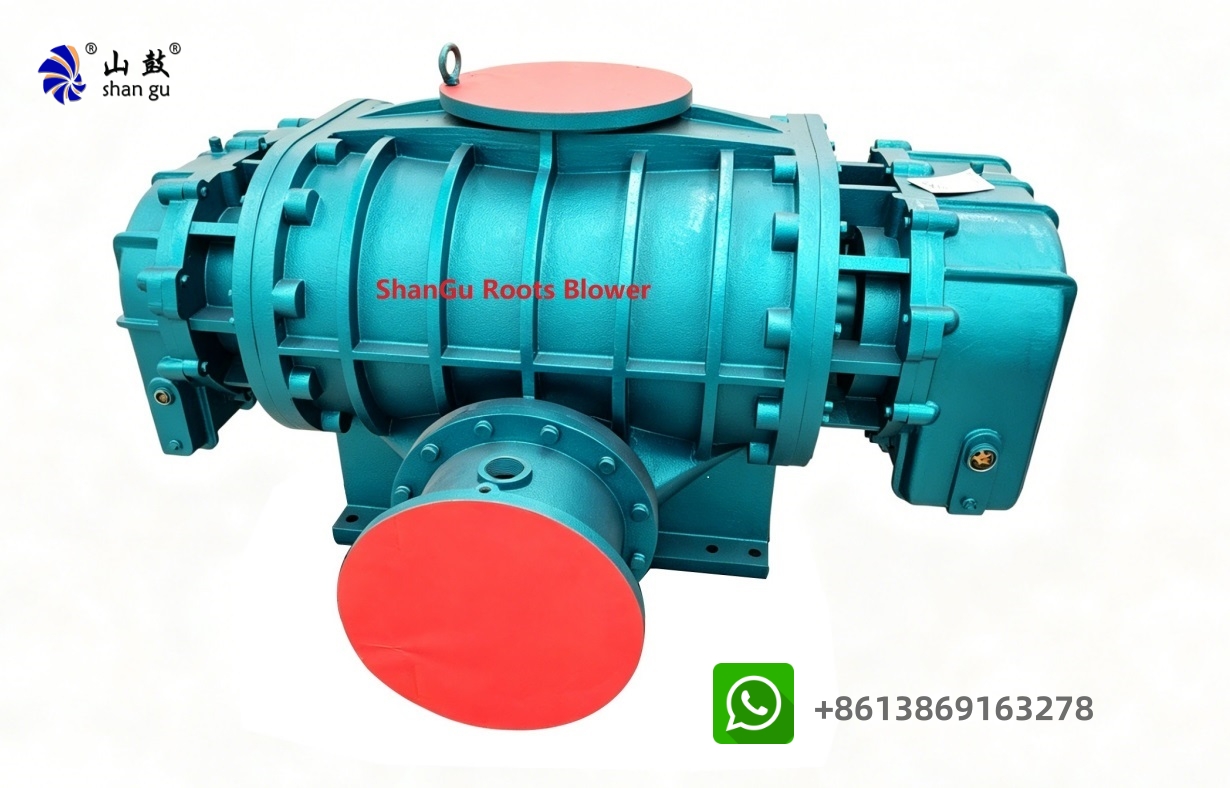
Inár bplé roimhe seo ar silo fuinseog / gásúchán hopper (sreabhánú), chlúdaíomar an bunphrionsabal: bhrú téite, triomaítear aer comhbhrúite isteach sa umar sreabhánaithe ionas go sreabhófar an ciseal fuinseoige os cionn an phláta póiriúil agus go sleamhnaítear i dtreo an asraon. Laistigh den slabhra seo, an trealamh a “cuireann sé an t-aer isteach” a shonraítear beagnach go huilíoch mar séidire fréamhacha.
Míníonn an t-alt seo an prionsabal ceann go ceann, soiléiríonn sé ról an séidire fréamhacha gásúcháin silo fuinseog, soláthraíonn sé léaráid sreafa próisis leis an séidire san áireamh, agus cuireann sé roghnú praiticiúil agus seirbhíse sé séidire fréamhacha treoir d’oibreoirí gléasra agus foirne soláthair.
Achoimre Thapa: Cad a Dhéanann an Córas Gásúcháin Silo Fuinseoige
Ag bun an chón fuinseog silo (nó hopper ESP), trachanna sreabhánaitheeagraithe go gathach. Is é dromchla an umar a pláta sreabhánaithe (de ghnáth pláta scagach sintéaraithe sileacain-carbíde). Le linn oibríochta:
- A sé séidire fréamhachacuireann sé brú ar aer comhthimpeallach agus seachadann sé le sruth
- An téitheoir leictreachardaíonn agus triomaíonn an t-aer (de ghnáth 80–150°C / 176–302°F)
- Síolann aer te go haonfhoirmeach trí mhicreapóraí an phláta sreabhánaithe, scannán aeir a fhoirmiú idir cáithníní fuinseoige
- Aistríonn an luaith eitilt ó charn statach go staid sreabhán cosúil le leacht; titeann an uillinn repose go géar, agus sleamhnaíonn fuinseog feadh an fhána umar 6°–15° i dtreo an asraon sceite
I silos bun cothrom, De ghnáth socraítear trachanna sreabhánaithe gathach, ag clúdach ≥15% den limistéar bonn silo, le tomhaltas aeir ar leith de thart 0.62 Nm³/(m2·nóiméad).
Laistigh den chóras seo, nach bhfuil an séidire an “réalta”—ach má tá an séidire mícheart roghnaithe, theipeann ar théamh agus sreabhánú araon.
Cén fáth a bhfuil séidire PD (Sé séidire fréamhacha) An Caighdeán Tionscail é
I gásúchán silo fuinseoige, an pd séidire (séidire díláithrithe dearfach) sonraithe beagnach de réir réamhshocraithe. Nuair a dhéantar comparáid idir aonad fréamhacha agus lucht leanúna lártheifeacha, is léir an chúis:
| Comparáid | Sé séidire fréamhacha | Fan Lártheifeacha |
|---|---|---|
| Tréith sreabhadh | Sreabhadh tairiseach, tionchar íosta ag luaineacht ar ais-bhrú | Ard-seans maith in aice le buaic an chuair |
| Raon brú | Céim amháin 9.8–98 kPa, clúdaíonn sé riachtanas gásúcháin 8–15 kPa | Cineál íseal-bhrú de ghnáth <10 kPa; mí-éifeachtach más doimhne |
| Caoinfhulaingt deannaigh | Glacann sé le hais-sreabhadh beag fuinseoige, garbh | Impeller íogair ó thaobh caitheamh |
| Cothabháil | Struchtúr simplí, cúpla páirteanna chaitheamh, intí inseirbhíse | Tá cothromaíocht dhinimiciúil dhian ag teastáil |
| Torann | 3-dearadh lobe + tostóir inghlactha | Sraith costas níos ciúine ach níos airde |
Cúlbhrú córais gásúcháin = friotaíocht pláta sreabhánú + friotaíocht leaba fuinseog + caillteanas píblíne, san iomlán amháin 3–8 kPa, ach á cheangal sreabhadh cobhsaí, gan ardú, agus 24/7 oibriú leanúnach—go díreach i gcás ina bhfuil an “carachtar diana” de luíonn séidire fréamhacha.
Trí Ról Sonracha an Séidire Fréamhacha sa Chóras
① Soláthar aeir cobhsaí chun tacú leis an scannán sreabhánaithe
Níl na micreapóirí pláta sreabhánaithe ach na mílte miocrón ar leithead. Braitheann siad ar an mbrú íseal, ard-toirt aeir ón comhbhrúiteoir séidire fréamhachachuig “mboilgeog” go cothrom. Sreabhadh neamhleor → teip ar an scannán → criosanna luaithreach marbh; ró-shreabhadh → brúchtadh deannaigh → an iomarca ar an teach mála thuas. Tá nádúr sreabhadh tairiseach an mheaisín fréamhacha ag taitneamh anseo.
(Nóta: Tá séidire fréamhacha go teicniúil a comhbhrúiteoir díláithrithe dearfachag feidhmiú sa raon brú íseal. Sa tionscal tugtar a “sé séidire fréamhacha” agus a “comhbhrúiteoir séidire fréamhacha.”)
② Oibríonn sé leis an téitheoir chun aer te tirim a sheachadadh chuig an gcón
Tá an t-aer ón asraon fréamhacha go bunúsach ag teocht chomhthimpeallach, téann sé isteach sa téitheoir leictreach ansin chun 80–150°C a bhaint amach sula dtéann sé isteach sa silo. Eochairphointe: tá an t-aer a sheachadann an séidire fréamhacha tirim ó dhúchas (gan aon chéim fuaraithe/dí-humidiúcháin roimh ré); ní ardaíonn an téitheoir ach teocht, ní ath-dhí-humidíonn - ná cuir mearbhall air seo le a “fionnuar-ansin-reheat” thus.
③ aon-dleacht-aon-fuireachas / trí-rith-aon-fuireachas le haghaidh leanúnachais
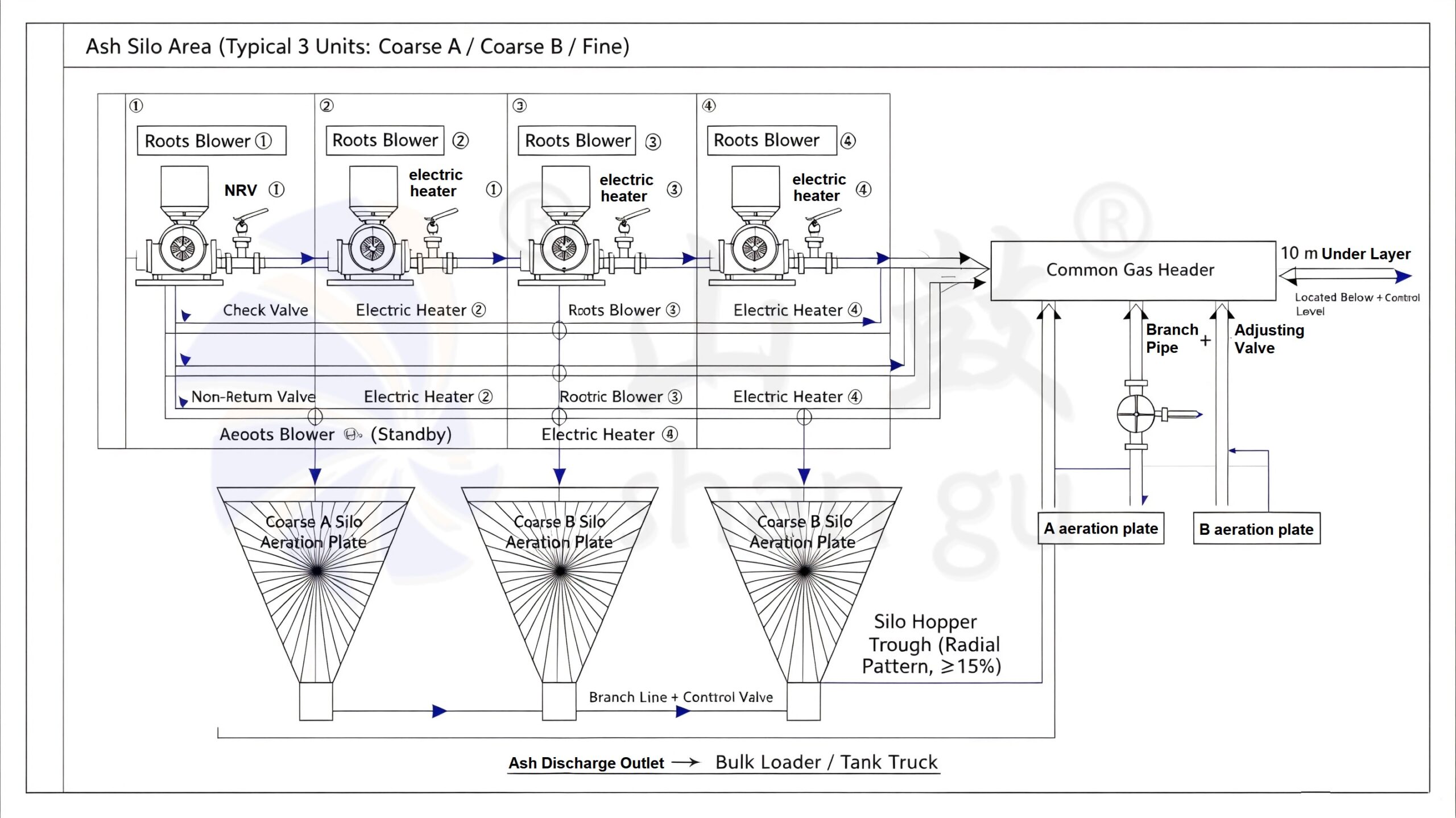
Cumraíocht tipiciúil le haghaidh 3 sadhlais fuinseoige (2 garbh + 1 breá) úsáidí 4 séidirí fréamhacha + 4 téitheoirí, triúr ag rith agus ceann fuireachas. Má theipeann ar aon aonad, Bíonn an fuireachas ar láimh. Socruithe casta comhthreomhar aer ionstraim plandaí + umar glacadóir ag an asraon fréamhacha mar chúltaca éigeandála - nuair a thiteann brú fréamhacha faoi bhun na tairsí, aistríonn an córas go huathoibríoch chuig aer cúltaca agus mar sin ní stopann sreabhánú.
Léaráid Sreabhadh Próisis le Séidire Fréamhacha Gásúcháin Silo Fuinseoige (Caighdeán)
Is é seo an chumraíocht is coitianta le haghaidh 300 MW / 600 aonaid MW sa tSín; is féidir é a úsáid go díreach le haghaidh P&Líníocht aitheantais:
Nód míniú:
Sé séidire fréamhacha: sreabhadh in aghaidh an silo meánmhéide ina n-aonar; silo beag/mheánach 5–15 m³/nóim, silo mór >1000 Úsáideann m³ 15–30 m³/nóim, brú 8–15 kPa le corrlach 10%–15%.
Comhla seiceála: cuireann sé cosc ar aer ardteochta ó théitheoir ag sreabhadh ar ais agus an séidire a dhó
Téitheoir leictreach: curtha in aice leis an silo; téitear go 80-150°C; Ba chóir go mbeadh téitheoir in aice leis an leagan amach silo
Ceanntásc: thíos an 10 m leibhéal, scoilteann príomhphíobán amháin go trí sadhlais, gach brainse le comhla inchoigeartaithe
Pláta sreabhánaithe: chomhdhúile sileacain sintéaraithe, suite ar umar, fánaí bun an trough 6°–15° i dtreo scaoileadh
Gaistí coitianta: ag cur an téitheoir rófhada ón silo → cailliúint teasa píblíne → teocht neamhleor ag an pláta → fuinseog fós tais. Luaigh caighdeáin “beidh an téitheoir gar do silo/dríodair,” ní randamach ag an 6 m leibhéal.
Roghnú & Séidire Fréamhacha Seirbhíse: Pointí Praiticiúla
Cuir glas ar na trí pharaiméadair roghnúcháin seo ar dtús:
1.Sreabhadh → umar sreabhánúcháin achar iomlán × 0.62 Nm³/(m2·nóiméad), ansin × corrlach 1.1–1.15
2.Brú → friotaíocht an chórais 3–8 kPa + corrlach, leagtar rang 8-15 kPa (silo ard / Bíonn leaba fuinseoige thicker teorainn uachtarach)
3.Cainníocht → trí silos ceithre séidirí (triúr ag rith fuireachas amháin) is norm tionscail; is féidir le silo amháin dualgas amháin a úsáid ar fuireachas
Dhá mhír chothabhála is mó a ndearctar orthu:
Caithfidh scagaire aeir a bheith ag an inlet séidire fréamhacha; ar shlí eile leathnaíonn ais-sreabhadh fuinseoige isteach sa rótar imréiteach agus titeann an sreabhadh
Comhghlasáil an téitheoir agus na fréamhacha: níor thosaigh séidire → téitheoir toirmiscthe; turas séidire → téitheoir fite fuaite, nó dó tirim é
Diagnóis locht tapa:
| Siomptóim | Cúis dócha |
|---|---|
| Níl an pláta ag bubbling go páirteach | Tripped aonad fréamhacha / comhla brainse dúnta / pláta micropore clogged |
| Silo fós ag bogadh | Teocht teasa neamhleor (thíos pointe drúcht) / limistéar trough <15% |
| Roots séidire sruth ard | Scagaire clogged / backpressure neamhghnácha téitheoir-taobh / imréiteach rótar daingean (easpa ola) |
CC
C: Cad a úsáidtear le haghaidh séidire fréamhacha gásúcháin silo fuinseoige?
A: Soláthraíonn sé brú íseal, aer comhbhrúite ar shreabhadh tairiseach chuig na trachanna sreabhánaithe ag bun silos fuinseoige gléasra guail, ag coinneáil fuinseoige cuilte sreabhánaithe ionas go scaoilfidh sé amach gan idirlinne ná cruaite.
C: Cén fáth a n-úsáidtear séidire fréamhacha in ionad lucht leanúna lártheifeacha le haghaidh gásúcháin silo fuinseoige?
A: A fréamhacha (PD) seachadann séidire sreabhadh leanúnach faoi bhrú droma luaineach, fhulaingt mion-iarsreabhadh fuinseoige, agus ritheann 24/7 le cothabháil shimplí - oiriúnach don dleacht gásúcháin ar éileamh cobhsaí 3-8 kPa.
C: Cén brú agus sreabhadh a theastaíonn ó chomhbhrúiteoir séidire fréamhacha le haghaidh sreabhánú silo fuinseog?
A: Brú 8–15 kPa de ghnáth le corrlach 10%–15%., agus sreabhadh bunaithe ar achar trough × 0.62 Nm³/(m2·nóiméad) × 1.1–1.15. Is minic go mbíonn 15-30 m³/nóiméad ag teastáil le haghaidh silos móra in aghaidh an séidire fréamhacha.
Faigh Athfhriotail Séidire Fréamhacha Saincheaptha le haghaidh Do Silo Ash
Tá an córas gásúcháin silo fuinseog simplí i bprionsabal ach deacair i ag rith saor ó thrioblóid ar feadh na mblianta. Is é an séidire fréamhacha is mó atá i gceannas ar an nideoige seo ní trí shainshonraí geala, ach trí thréith a bhuail pointí pian cothabhála: sreabhadh tairiseach + garbhacht + seirbhís éasca.
Le haghaidh tionscadal nua díshulfurization/láimhseála fuinseoige nó iarfheistis sean-silo a bhfuil gá acu le hathsholáthar séidire fréamhacha gásúcháin silo fuinseog, glas sna trí rialacha seo ar dtús: ríomh sreabhadh de réir achair umar, fág corrlach brú go leor, agus trí dhleacht-aon-fuireachas a úsáid. Ansin is féidir leis an téitheoir agus plátaí a dhéanamh.
Níl mé cinnte faoi shreabhadh nó brú? Seol chugainn do toirt silo, cóimheas garbh/mínfhuinseog, agus timthriall urscaoilte— déanfaimid aisiompú trí úsáid a bhaint as 0.62 Nm³/(m2·nóiméad) agus a séidire fréamhacha seirbhísetogra le plean páirteanna spártha.
👉 Déan teagmháil lenár bhfoireann innealtóireachta le haghaidh roghnú séidire PD, athsholáthair OEM, agus tacaíocht séidire fréamhacha seirbhíse ar fud an domhain.